Recycling and Sustainability — Gardening Lambeth
Welcome to Gardening Lambeth’s Recycling and Sustainability page, dedicated to creating an eco-friendly waste disposal area and a thriving sustainable rubbish gardening area across the borough. Our programme brings together practical site layout, material separation, and community partnerships to transform ordinary garden waste into resources for soil, mulch and reuse. We champion a green gardening rubbish area that reduces landfill, supports local biodiversity and lowers carbon emissions across our operations.Designing an eco-friendly waste disposal area
We prioritise clear separation zones and simple signage so that volunteers and contractors can sort materials at source. Using colour-coded bins for organics, mixed recycling and residual waste helps maintain high capture rates. The layout of our eco waste disposal area also includes covered storage for composting and drying wood chips, a dedicated reuse corner for pots and tools, and sheltered areas for bulky green waste awaiting transfer. Separation at source is central: it cuts contamination and increases material value for reuse and recycling.
Local recycling activities and borough approach
Gardening Lambeth aligns with the borough’s approach to waste separation, which encourages separate collection of food waste, garden waste, mixed recycling and careful textile and electrical equipment reuse. Typical recycling activities in our service area include:- Collecting garden and green waste for on-site composting or local anaerobic digestion
- Separating glass, cans and plastics at community gardens and transfer points
- Organising seasonal tool and pot exchanges to extend product life
Local transfer stations and resource loops
We work with nearby local transfer stations across south London and municipal transfer hubs to ensure garden waste is processed properly when off-site processing is needed. These transfer stations are essential nodes in our green logistics chain, consolidating loads for composting facilities or materials recycling centres. By routing sorted loads through local transfer stations, we reduce double-handling and keep transport distances short. Our collaboration with transfer stations helps maintain strict separation standards so more material stays in a circular economy loop. Recycling percentage target and monitoring — Gardening Lambeth has set a clear, measurable ambition: reach a 65% recycling rate across our gardening waste streams by 2030. This target applies to diverted green waste, segregated recyclables and reused items collected from sites. We use simple metrics—tonnes diverted, contamination rates and reuse volumes—to track progress. Regular audits of the sustainable rubbish gardening area and community reporting help us refine operations, while monthly collection metrics identify opportunities to increase capture and reduce residual waste.
Low-carbon vans and sustainable transport
Transport is a key part of an eco-friendly waste disposal area strategy. Gardening Lambeth uses a growing fleet of low-carbon vans — primarily electric and hybrid cargo vehicles — to move materials between gardens, transfer stations and processing sites. Where possible we schedule consolidated runs to avoid empty miles and run low-emission routes during quieter traffic windows. Using low-carbon vans reduces emissions and demonstrates how a sustainable rubbish gardening area can scale without compromising air quality.On-site techniques also play a large role. We implement in-situ composting bays, wood-chip mulching stations and bokashi systems for food-amended compost to limit transport needs. A properly organised sustainable gardening waste zone encourages volunteers to separate leaves, woody prunings, turf and food residues so each stream receives the right treatment — be it hot composting, slow mulching or local anaerobic digestion. This combination of practices helps return nutrients to soils and reduces the need for imported amendments.
 Partnerships with charities and community organisations are central to our reuse strategy. Rather than sending usable tools, furniture or plant pots to disposal, we partner with local charities, community reuse centres and social enterprises that accept and refurbish items. These partnerships create social value by supporting job training and enabling low-cost access to gardening equipment. Typical partners include community reuse hubs, plant swap groups and charities that specialise in refurbishing tools and household garden equipment for redistribution.
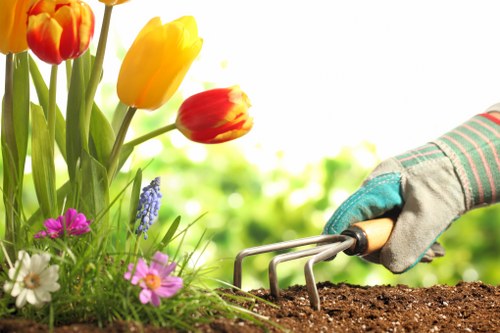 What a community sustainable rubbish gardening area looks like — A successful site combines clear signage, separate containers for organics, recyclables and residuals, a compact reuse stall for giveaway items and a small secure area for bulky wood or inert materials. Volunteers are trained in simple sorting rules and seasonal campaigns promote textile and electrical equipment take-back. We celebrate incremental improvements: every tonne diverted is progress toward our 65% target and a lower-carbon future for gardening in Lambeth.
Ongoing commitments
Gardening Lambeth remains committed to continuous improvement. We will deepen ties with municipal transfer stations, expand partnerships with charities and community organisations, and invest in further low-carbon vehicles to shrink our transport footprint. Through education, transparent monitoring and practical site design, our aim is to embed an eco-friendly waste disposal area culture across all community gardens and green spaces.Get involved
Join our effort to build sustainable gardening systems that prioritise reuse and resource recovery. Whether by volunteering in a sorting hub, helping maintain compost bays, or supporting our reuse partnerships, local action makes the difference. Together we can scale the model of a resilient, low-carbon sustainable gardening waste zone that keeps material value in the borough and supports thriving green spaces.Summary commitment: A borough-focused, circular approach: 65% recycling target by 2030, partnerships with local transfer stations and charities, and a transition to low-carbon vans to deliver a truly sustainable rubbish gardening area for Lambeth.